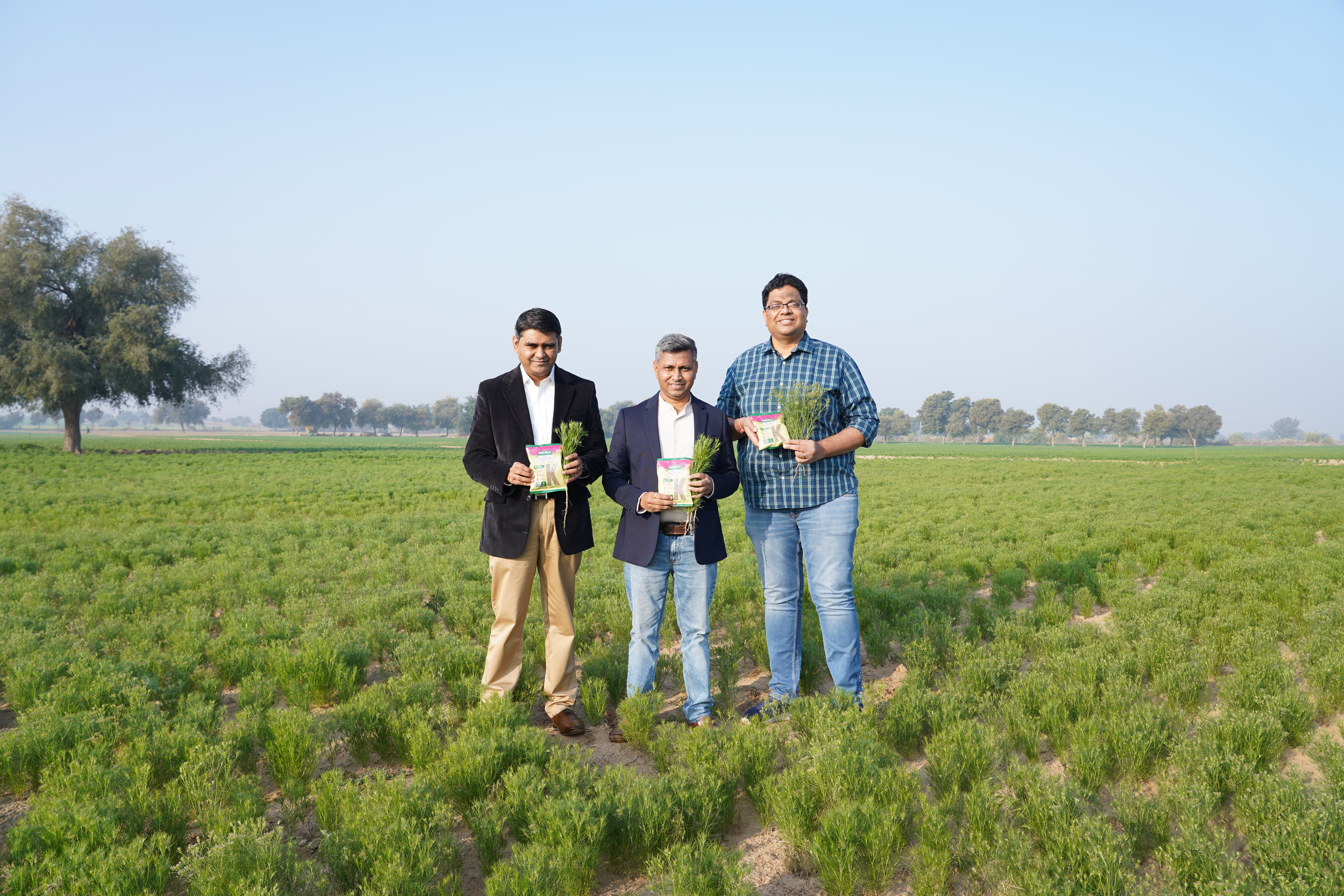
India has a food problem. Not a shortage of it — but a crisis of trust in it. Everyday essentials that fill Indian kitchens — spices, grains, pulses, oils, seeds, and dry fruits — are routinely compromised through adulteration, excessive processing, and synthetic interventions. The consequences are not abstract. They show up in chronic health conditions, in eroding consumer confidence, and in the quiet struggle of millions of farmers who strive to grow responsibly but lack the knowledge, market access, and institutional support to sustain it.
Regulatory frameworks exist. But implementation is uneven. Awareness is still evolving. And the gap between what India's food system could be and what it currently is remains wide. The Khetika Foundation was established to close that gap.
A Partnership Built on Shared Conviction
In May 2025, Khetika Foundation formally partnered with the Indian Institute of Management Ahmedabad — one of India's most respected academic institutions — to launch Clean Food India 2030, a joint initiative designed to build a scalable, evidence-based pathway towards a cleaner, more transparent food ecosystem for India.
The partnership brings together two complementary strengths. Khetika Foundation contributes on-ground expertise in building clean, traceable food systems — years of direct work with farmers, sourcing networks, and consumer communities that understand what clean food actually requires at ground level. IIM Ahmedabad contributes academic rigour, research infrastructure, and deep expertise in supply chain design, behavioural sciences, market systems, and governance.
Together, the initiative is designed not as a campaign, but as a blueprint — a long-term, evidence-based effort to drive systemic change across India's food value chain.
What Clean Food India 2030 Sets Out to Do
The initiative is structured around six interconnected objectives, each targeting a different layer of the clean food challenge. Awareness and behaviour change sits at the foundation — because no systemic shift is possible without informed citizens and conscious consumers. The initiative will work to increase awareness about food adulteration and its health impacts, and to drive genuine demand for clean, honest food.
Farm-to-plate best practices address the supply side directly — documenting, validating, and disseminating practices that ensure adulteration-free food at every stage of the value chain, from cultivation to the consumer's plate. Capacity building recognises that knowledge without access is useless. The initiative will train farmers, processors, traders, and retailers on clean food production, procurement, processing, and storage — building competence where it is most needed.
Policy and ecosystem development takes the long view. Evidence and actionable insights generated through the initiative will be used to influence regulation, build multi-stakeholder coalitions, and shape the institutional architecture that India's clean food future will depend on. Impact measurement ensures accountability — tracking adoption rates, consumer trust, farmer income, and economic benefits across the ecosystem to build a rigorous, honest record of what is working and what is not.
And finally, sustainable climate practices — because a clean food system must also be a climate-resilient one. The initiative will promote climate-health friendly, sustainable practices across food supply chains, supporting long-term resilience for farmers, land, and the broader food ecosystem.
Why This Matters and Why Now
India's food adulteration problem is not new. What is new is the recognition that addressing it requires more than enforcement — it requires building an ecosystem where clean food is the economically rational, institutionally supported, and culturally valued choice for every actor in the chain. That is what Clean Food India 2030 is designed to do.
Over a structured five-year roadmap, the initiative will move from baseline research and value chain mapping to large-scale training programmes, pilot clean food clusters, consumer awareness campaigns, traceability systems, and policy white papers — building toward a national blueprint that can scale. The IIM Ahmedabad partnership is not a symbolic endorsement. It is a working collaboration — combining field execution with academic infrastructure in a way that neither institution could achieve alone.
The Beginning of Something Larger
Khetika Foundation believes that achhai se farak padta hai — that goodness makes a difference. Clean Food India 2030 is the first formal expression of that belief at a systemic scale. It begins with this partnership. It begins with this commitment. And it begins now — because the longer India waits, the wider the gap grows between the food system we have and the one every Indian deserves.